Risk Perception vs Reality
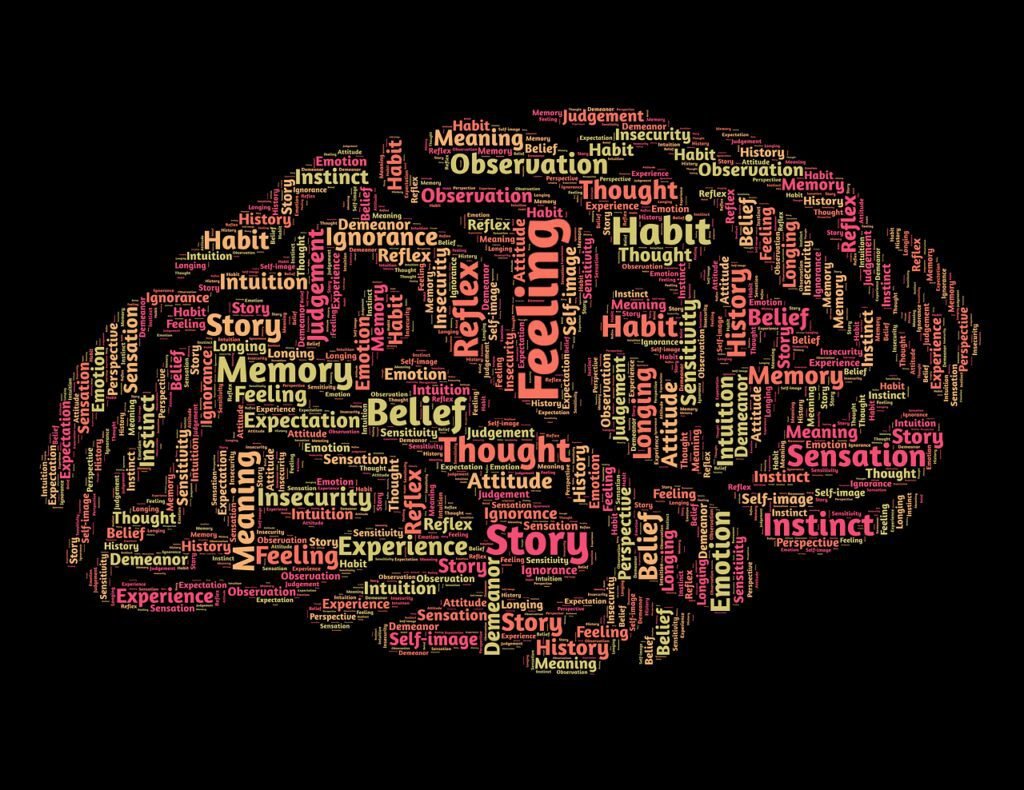
Risk management is often described as a technical discipline grounded in data, controls and formal analysis. In reality, however, risk is never assessed in a purely technical way. Human judgement plays a central role in how uncertainty is interpreted, prioritised and acted upon.
Organisations do not usually fail because information is entirely absent. More often, they fail because warning signs are misunderstood, ignored or filtered through emotion, pressure and assumption. The way people perceive risk can shape decisions just as strongly as the underlying facts.
This creates a significant challenge for governance and decision-making. Human beings are not naturally objective when assessing uncertain situations. Fear, urgency, overconfidence and simplification all influence how threats and opportunities are viewed.
The challenge becomes even greater in environments shaped by constant information flows, media pressure and operational uncertainty. Dramatic and visible events tend to attract immediate attention, while slower-moving, structural or systemic risks are often underestimated.
This is why the relationship between risk perception and cognitive bias matters so much. Effective risk management is not only about having better data. It is also about understanding the behavioural tendencies that can distort judgement before decisions are made.
The concept of Factfulness, introduced by Hans Rosling, offers a useful lens for understanding these tendencies. Rosling identifies a set of “dramatic instincts” that shape how people interpret the world, often in ways that exaggerate danger, simplify complexity or distort priorities. In a risk management context, these instincts can become practical sources of weakness if they are not recognised and challenged.
Why Cognitive Bias Matters in Risk Management
Risk Is Interpreted, Not Just Measured
Risk is not purely mathematical. It is interpreted through human judgement, and that judgement is influenced by experience, incentives, beliefs and emotional response. Two people can review the same information and still come to very different conclusions about what matters and what should happen next.
This is one of the reasons why risk management cannot rely on data alone. Data can inform a decision, but it does not make the decision on its own. Someone still has to interpret the evidence, assess relevance, weigh uncertainty and choose how to respond.
In strategic, operational and governance settings, this challenge becomes more pronounced. Information is often incomplete, timelines are compressed, and uncertainty cannot be removed. Under those conditions, perception becomes a decisive factor.
A risk may be statistically small but perceived as urgent because it is dramatic or politically sensitive. Another may be objectively material but receive little attention because it develops gradually or lacks visibility. That gap between reality and perception is where cognitive bias begins to influence risk outcomes.
Bias as a Risk Multiplier
Cognitive bias does not simply create isolated judgement errors. It can act as a multiplier that increases the probability of poor decisions across an organisation. Once bias shapes what gets noticed, what gets escalated and what gets ignored, it begins to influence the entire control environment.
Some risks attract disproportionate attention because they are vivid, recent or emotionally charged. Others remain under-managed because they feel familiar, abstract or slow-moving. This can distort risk prioritisation and lead organisations to focus resources in the wrong places.
The consequences are practical rather than theoretical. Bias can contribute to weak strategic prioritisation, delayed responses to emerging threats, excessive controls in low-value areas and insufficient oversight where exposure is actually growing.
In this sense, bias is not separate from risk management. It is part of the risk landscape itself. Even when technical frameworks appear robust, distorted perception can still undermine the quality of decision-making.
The Challenge for Organisations
Modern organisations have access to far more information than in the past. Dashboards, reporting tools, risk registers and external data sources all create the impression of analytical strength. Yet many organisations still make poor risk decisions.
The reason is not always weak data capability. Often, the issue is behavioural. Information may exist, but it is filtered through organisational culture, hierarchy, incentives and the assumptions of the people involved.
Structured governance frameworks can reduce these weaknesses, but they cannot eliminate them entirely. Committees, reporting structures and formal controls help create discipline, yet human interpretation remains at the centre of every important decision.
This makes risk culture especially important. In environments where challenge is discouraged, escalation is seen negatively, or senior assumptions are rarely questioned, cognitive bias becomes more dangerous. Understanding bias is therefore not an academic exercise. It is a practical requirement for effective governance and resilient decision-making.
The Ten Dramatic Instincts in a Risk Context
The Gap Instinct
The gap instinct is the tendency to divide the world into opposing categories such as safe or dangerous, success or failure, strong or weak. It encourages binary thinking even when reality is more complex.
In risk management, this can be particularly damaging. Complex environments are reduced to simplified categories, while nuance, dependency and partial exposure are overlooked. Risks are rarely absolute. Most exist on a spectrum and evolve over time.
This instinct can also reinforce silo thinking inside organisations. Functions may assess risk only from their own perspective, without recognising how their decisions interact with wider operational or strategic exposures. Stakeholder groups may also be viewed too simplistically, even though different groups may be affected by the same risk in very different ways.
Effective risk management requires more nuance than the gap instinct allows. Good governance depends on recognising gradations, trade-offs and interdependencies rather than forcing complex issues into overly simple categories.
The Negativity Instinct
The negativity instinct reflects the tendency to focus disproportionately on bad news, visible failures and negative developments. In risk environments, this can create the impression that conditions are constantly deteriorating, even when resilience, learning and adaptation are also taking place.
Negative information naturally attracts attention. Incidents, control failures and crises are highly visible, while gradual improvement or successful mitigation often receives less attention. This creates an imbalance in how the organisational environment is understood.
If left unchecked, this instinct can lead to excessive risk aversion. Organisations may become so focused on avoiding failure that they struggle to make balanced decisions about opportunity, innovation or strategic change.
Good risk management should never ignore threats, but neither should it become trapped in a permanently defensive mindset. Effective judgement requires a realistic view of both vulnerability and resilience.
The Straight Line Instinct
The straight line instinct is the assumption that current trends will continue indefinitely in the same direction. It appears frequently in forecasting, planning and strategic analysis, especially when historical data is projected into the future without sufficient challenge.
This can create false confidence. Growth curves, incident frequencies or market shifts may look stable when viewed through recent data, but real systems rarely behave in a smooth, linear way. Economic shocks, regulatory changes, behavioural shifts and geopolitical disruptions can quickly alter the direction of events.
In risk management, linear thinking creates forecasting risk. It can lead organisations to underestimate volatility, miss turning points or fail to prepare for discontinuity.
This is why strong analytical frameworks rely not only on trend analysis, but also on scenario analysis, stress testing and alternative assumptions. Good governance recognises that the future is rarely a straight continuation of the past.
The Fear Instinct
The fear instinct causes people to overreact to risks that are dramatic, emotionally visible or easy to imagine. Rare events with high emotional impact often receive more attention than slower-moving threats that may be more material over time.
This affects prioritisation. Immediate and vivid threats dominate executive attention, especially when media exposure, public concern or uncertainty amplify the emotional response. Meanwhile, structural vulnerabilities may receive less attention simply because they are less dramatic.
The result can be distorted resource allocation. Organisations may invest heavily in high-visibility threats while giving insufficient attention to underlying weaknesses in process, culture or resilience.
Effective risk management requires proportionality. Decisions should be based on evidence, exposure and materiality rather than on emotional intensity alone.
The Size Instinct
The size instinct reflects the difficulty people often have in understanding scale, proportion and relative significance. Numbers can appear dramatic in isolation even when their real importance is limited.
In a risk context, this can lead to misleading interpretations of metrics, incidents or losses. A percentage increase may sound alarming, but without context it may reveal little about actual exposure. Likewise, large figures may attract attention even when they are not especially material relative to the wider organisation.
This creates practical challenges for prioritisation and reporting. Visible metrics can dominate discussions simply because they are easy to present, while more significant but less obvious risks remain under-examined.
Strong governance depends on context. Risk information should always be interpreted in relation to trend, baseline, concentration and overall significance rather than viewed in isolation.
The Generalisation Instinct
The generalisation instinct is the tendency to assume that categories, groups or situations behave in broadly similar ways. It simplifies complexity by treating difference as unimportant.
Within organisations, this can lead to broad assumptions about customer groups, operating units, controls, markets or geographies. Similar labels can create a false sense of similarity even where underlying exposures differ significantly.
This weakens scenario analysis and risk assessment. Controls that work in one environment may not work in another, and assumptions that hold true in one part of the organisation may not transfer effectively elsewhere.
Reducing this bias requires segmentation, contextual judgement and a willingness to examine what is different rather than only what appears familiar. Good risk assessment is rarely improved by over-generalisation.
The Destiny Instinct
The destiny instinct is the belief that things are largely fixed and unlikely to change in any meaningful way. In organisational settings, this often appears as confidence that existing models, structures or behaviours will continue because they have worked in the past.
This creates resistance to change and weakens sensitivity to emerging risk. Markets evolve, regulation shifts, technologies disrupt established assumptions and stakeholder expectations change over time. Organisations that underestimate this dynamism become more vulnerable to strategic surprise.
The destiny instinct can therefore create blind spots. Risks linked to transformation, disruption or structural change may receive too little attention until they become urgent.
Effective governance requires recognising that stability is rarely permanent. Adaptation is not optional; it is part of long-term resilience.
The Single Perspective Instinct
The single perspective instinct is the belief that one framework, one discipline or one type of analysis can explain everything important. In risk management, this often appears through over-reliance on specific metrics, models or methodologies.
Quantitative analysis is valuable, but it does not capture the full complexity of uncertainty. Likewise, qualitative judgement is essential, but it can also be incomplete when unsupported by data. No single lens is sufficient on its own.
Over-reliance on one perspective creates blind spots. It can encourage model risk, suppress dissenting views and reinforce confirmation bias when evidence is interpreted only through a preferred framework.
Stronger decisions emerge when organisations combine perspectives rather than defend a single method as complete. Cross-functional challenge and mixed analytical approaches improve both depth and resilience in decision-making.
The Blame Instinct
The blame instinct is the tendency to search for an individual to hold responsible when something goes wrong. While accountability is important, an excessive focus on blame often oversimplifies failure.
Many incidents result from a combination of weak controls, flawed incentives, cultural issues, poor communication and structural weaknesses rather than a single individual error. When organisations look only for someone to blame, they often miss the wider system failure.
This instinct also damages risk culture. In blame-heavy environments, people become more defensive, escalation becomes less likely and transparency suffers. Staff may avoid raising concerns or reporting mistakes because the personal cost feels too high.
A strong risk culture distinguishes accountability from scapegoating. Learning improves when organisations focus on root causes and system design rather than on finding a convenient target.
The Urgency Instinct
The urgency instinct creates pressure to act immediately before fully understanding the situation. In risk environments, this can push organisations towards reactive decisions that appear decisive but are not necessarily effective.
Urgency is not always wrong. Some situations genuinely require fast action. The problem arises when urgency becomes a substitute for structured thinking, challenge and proportionality.
Under pressure, governance can be bypassed, assumptions can go untested and visible action can be prioritised over meaningful action. The demand to do something quickly may reduce analytical quality and increase long-term exposure.
Effective organisations balance responsiveness with discipline. Speed matters, but speed without judgement can create additional risk rather than reducing it.
From Instinct to Risk Governance
Understanding cognitive bias is only the first step. The more important question is how organisations translate that awareness into stronger governance and better decisions.
Human instincts cannot be removed from decision-making, nor should they be. Judgement, intuition and experience remain valuable. The objective is not to eliminate human input, but to strengthen it through structure, evidence and challenge.
This is where governance becomes essential. Good risk governance recognises that perception is shaped by incentives, culture, hierarchy and emotional response. It therefore creates mechanisms that reduce distortion and encourage more balanced judgement.
Better governance does not mean slower governance. It means ensuring that decisions are exposed to enough scrutiny, diversity of thought and contextual understanding before they are acted upon.
Building Better Decision-Making
Better decision-making requires more than better reporting. It requires structured challenge. Organisations should create processes that actively test assumptions, question conclusions and examine alternative interpretations before action is taken.
Scenario analysis is valuable because it forces decision-makers to consider different futures rather than rely on a single narrative. Stress testing serves a similar purpose by exposing vulnerabilities that may remain hidden under normal assumptions.
Decision quality also improves when uncertainty is acknowledged openly. Excessive confidence often creates more risk than admitting limitations. Leaders who recognise uncertainty are often better positioned to make proportionate and resilient choices.
The goal is not perfection. It is disciplined judgement supported by evidence, debate and realistic assumptions.
Risk Culture and Psychological Safety
Risk culture has a direct influence on how information is interpreted, escalated and challenged. In environments where people are reluctant to speak openly, cognitive bias becomes far more dangerous.
Psychological safety is therefore a practical governance issue, not merely a cultural aspiration. Teams need to feel able to question assumptions, highlight uncomfortable information and present dissenting views without fear of blame or reputational damage.
Where challenge is absent, groupthink becomes more likely. Where people remain silent, flawed decisions face less resistance. Over time, this weakens organisational learning and increases the risk of repeated failure.
Strong governance relies on constructive tension rather than passive agreement. A healthy risk culture makes it easier to surface uncertainty before it becomes crisis.
Data, Context and Critical Thinking
Data is essential, but it does not eliminate bias. Metrics, dashboards and reports can improve visibility, yet they still require interpretation. Without context, numbers can reinforce misleading narratives instead of improving understanding.
Critical thinking remains central to effective risk management. This means examining assumptions, recognising limitations and distinguishing between signal and noise. It also means resisting the temptation to treat visibility as importance.
Not every issue deserves the same level of attention, and not every dramatic risk is the most material. Proportionality matters. The ability to connect data with context is often what separates strong risk judgement from weak reaction.
Effective governance therefore combines quantitative analysis with contextual understanding, strategic awareness and disciplined scepticism.

Ways to Reduce Bias in Risk Management
Bias cannot be removed entirely, but organisations can reduce its influence through deliberate and structured practices. The objective is to make distorted judgement less likely and balanced challenge more routine.
One useful approach is scenario analysis. By exploring multiple possible outcomes, organisations reduce reliance on straight-line thinking and create a more realistic understanding of uncertainty.
Stress testing is equally valuable. Examining extreme but plausible events helps reveal vulnerabilities that may remain hidden when analysis is based only on normal operating assumptions.
Independent review functions add another important safeguard. Internal audit, second-line risk teams and external reviewers can challenge dominant narratives, identify blind spots and test whether assumptions are too narrow or too comfortable.
Cross-functional governance also strengthens decision-making. Risks rarely sit neatly within a single function, yet many organisations still assess them through fragmented structures. Bringing together different perspectives improves insight and reduces silo-based judgement.
Diversity of experience and expertise is another important defence against bias. Teams with similar backgrounds, incentives and assumptions are more vulnerable to groupthink and confirmation bias. Broader perspectives improve challenge and increase the likelihood that weak assumptions will be questioned.
Finally, organisations need clear escalation frameworks. People should know when concerns must be raised, how issues should be escalated and what support exists when information challenges prevailing assumptions or strategic priorities.
Reducing bias is therefore not simply a matter of awareness training. It is a governance issue that depends on structure, culture, accountability and disciplined decision processes.
Risk Requires Factfulness
Risk management is not only about controls, models or data. It is also about how people interpret uncertainty and decide what matters. Perception influences priorities, shapes escalation and affects the quality of decisions at every level of an organisation.
Cognitive bias is therefore not a minor behavioural issue at the edge of risk management. In many cases, it sits close to the centre of why organisations misjudge exposure, misread warning signs or respond poorly to change.
The principles associated with Factfulness provide an important reminder that better judgement depends on proportionality, evidence and openness to challenge. Organisations do not need perfect objectivity, but they do need frameworks that reduce distortion and strengthen critical thinking.
Bias cannot be fully eliminated. However, it can be recognised, challenged and managed. Organisations that take this seriously are better placed to make balanced, resilient and evidence-based decisions.
Better risk management begins with a simple but demanding insight: perception itself is part of the risk landscape.